MINNS GOVERNMENT MUST PREVENT NEW NORTHERN BASIN BUYBACKS

The Minns Labor Government must put NSW first and prevent any further Commonwealth water buybacks in the Northern Basin, following the Federal Government’s announcement that it is seeking to purchase additional entitlements.
The updated Restoring Rivers Trading Strategy confirms the Commonwealth will open a voluntary Expression of Interest process targeting entitlement holders in the northern Murray-Darling Basin.
However, recovery targets in the Northern Basin NSW Zone have already been exceeded by 36.1 gigalitres.
As at 31 December 2025, Basin communities had delivered 2,062 GL of the 2,075 GL Bridging the Gap target, in addition to 221.2 GL toward the 450 GL of additional environmental water.
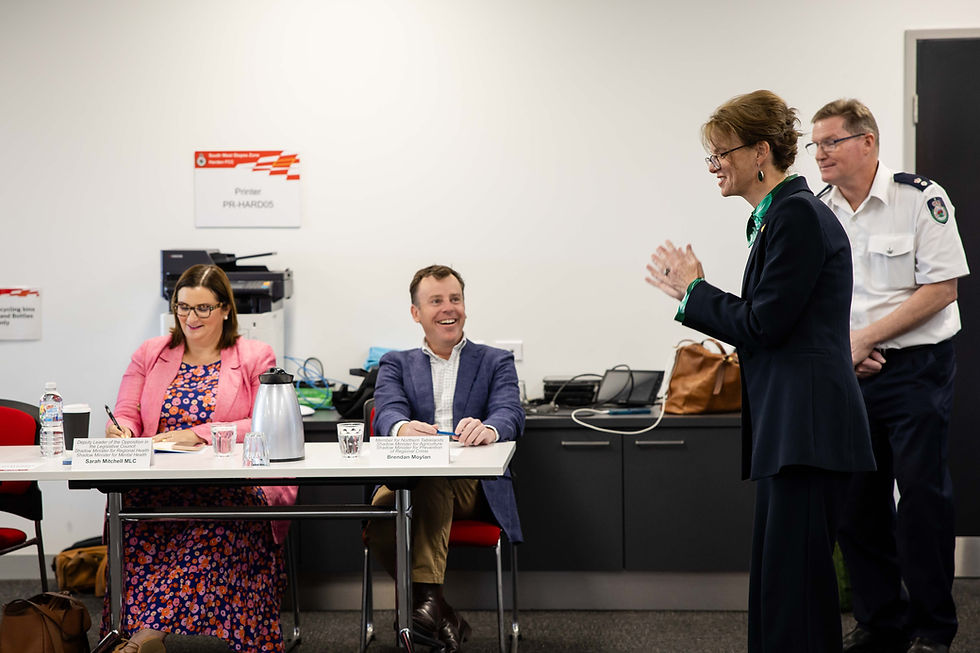
Shadow Minister for Water Steph Cooke said NSW irrigators and regional communities have already carried a disproportionate share of the recovery task.
“NSW has contributed more environmental water than any other state,” Ms Cooke said.
“Targets in the Northern Basin NSW Zone have already been met and exceeded.
“It makes no sense to strip more productive water out of communities that have already done the heavy lifting.
“The Commonwealth should be looking to jurisdictions that have delivered significantly less recovery to date, rather than returning once again to Northern NSW.”
Ms Cooke said the Premier has repeatedly stated in Parliament that his government opposes further water buybacks in NSW.
“This is the Premier’s moment to stand by his word,” Ms Cooke said.
“If he truly opposes further buybacks, he must formally communicate that position to the Commonwealth and make it clear that NSW communities should not be targeted again.
“The Premier cannot continue to speak against buybacks in Sydney while leaving the door open to them in Canberra.”
While the Commonwealth describes the process as voluntary, Ms Cooke said cumulative buybacks have long-term structural impacts on regional economies.
“Every gigalitre removed from production affects local jobs, farm investment, processing capacity and community viability,” Ms Cooke said.
“These impacts do not disappear simply because a sale is voluntary.
“NSW communities deserve clarity, leadership and a Government willing to put their interests first.”